252

Author
Meat.Milk
Share on


Published on
2026 April 21
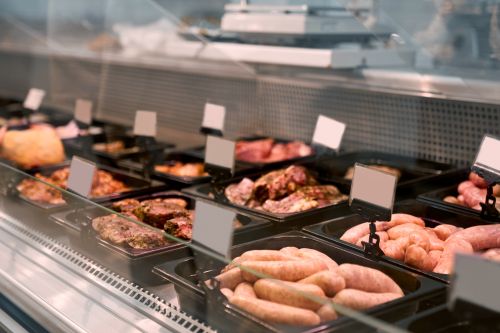
Romania’s meat market is entering a phase in which stability is no longer optional. In the pig sector, where more than 60% of consumption is covered by imports, price volatility at European level — with fluctuations of 10–20% over intervals of just a few months — has forced processors to reduce dependence on the spot market. In this context, medium-term contracts are becoming an operational instrument, not merely a commercial one.
Industry data show that slaughterhouses and processors operate efficiently only above a utilization threshold of approximately 70–75% of capacity. Below this level, fixed costs rise rapidly and margins become unstable. In the absence of a predictable flow of animals, these thresholds are difficult to achieve, which explains the shift toward contracts with supplying farms.
For farms, access criteria are becoming quantifiable. Performance differences are significant: feed conversion can vary by 0.3–0.5 kg feed per kg of gain, while delivery weight may deviate by 5–10%. These differences translate into additional costs of 8–12% per animal, enough to eliminate competitiveness within a strictly negotiated contract.
At the same time, feed costs, which account for 60–70% of total costs in pig farms, add another layer of pressure. During periods of cereal price volatility, price swings can alter production costs by double digits within a single cycle. Contracts increasingly include adjustment formulas, yet these do not fully offset losses generated by inefficiency.
For processors, the advantage is clear: supply stability, optimized flows and reduced operational risk. For farms, the contract becomes an economic filter. Only operations capable of delivering consistently, with minimal variation, can remain in the system.
For 2026, the meat market will no longer be organized around daily pricing, but around measurable performance. Contracts do not standardize the market; they separate it. The difference between access and exclusion will be determined by indicators: cost, yield and consistency.
(Photo: Freepik)
Did you learn something new from this article?
Read also: