401

Author
Meat.Milk
Share on


Published on
2026 March 31
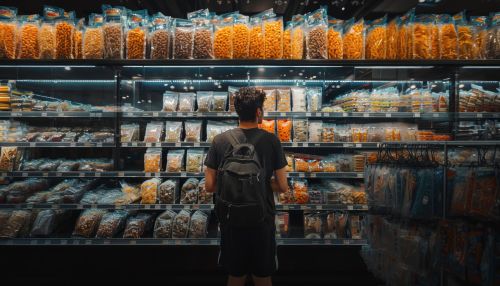
In the current structure of the food market, the shelf is no longer a display space, but a mechanism of economic selection. Access to the consumer is filtered through increasingly strict commercial criteria, and retail becomes the link that decides not only what is sold, but also what is produced.
The concentration of modern trade has transferred a significant share of negotiating power to large retail chains. In Romania, modern retail exceeds 70% of food product sales in urban areas, which means that most producers depend directly on access to these channels. In this context, listing is no longer a commercial objective, but a condition for market existence.
Selection criteria have become more refined. Product rotation, delivery predictability, and logistical support capacity are evaluated simultaneously with price positioning and consumer adaptation. Products that fail to meet performance thresholds are quickly eliminated, sometimes within cycles of just a few months. This dynamic significantly reduces the space for experimentation and penalizes lack of consistency.
At the same time, private label brands continue to strengthen their position. In some food categories within the European Union, they exceed 30–40% of volume, and the trend is reflected in Romania as well. Through direct control over specifications, pricing, and suppliers, retailers reduce dependence on traditional brands and optimize their margins.
For producers, this model changes the business logic. Differentiation is no longer sufficient without operational capacity. A competitive product must be supported by consistent volumes, stable deliveries, and rapid adaptation to commercial requirements. In the absence of these elements, even well-positioned products can lose access to the shelf.
At the same time, the relationship with retail becomes more complex. Negotiation no longer targets only price, but also includes commercial contributions, logistical conditions, and involvement in promotion. The cost of market access increases, and the pressure is transferred along the chain, down to the level of raw materials.
For 2026, the direction is clear: the market will be defined by producers’ ability to operate within the logic of retail, not the other way around. Integration, scaling, and operational professionalization become basic conditions. Without them, access to the consumer will be limited, regardless of product quality.
The shelf no longer reflects the market; it shapes it. Those who understand this shift can build their position. Those who ignore it lose access to it.
(Photo: Freepik)
Did you learn something new from this article?
Read also: