361

Author
Meat.Milk
Share on


Published on
2026 March 17
Romania’s trade deficit in the food sector has, for the first time in the past decade, taken a step back. According to data from the National Institute of Statistics and economic analyses published in the specialized press, the deficit for food products – excluding live animals and cereals – stood at approximately €6.3 billion in 2025, nearly 10% lower than in the previous year.
This is an important development in a sector that has accumulated significant trade imbalances in recent years. However, an analysis of the agri-food trade structure shows that Romania continues to record deficits in most major food categories – from meat and dairy to vegetables, fruits, and processed products. Therefore, the recent reduction in the deficit does not yet reflect a structural transformation of the food industry, but rather the result of specific developments in certain sectors.
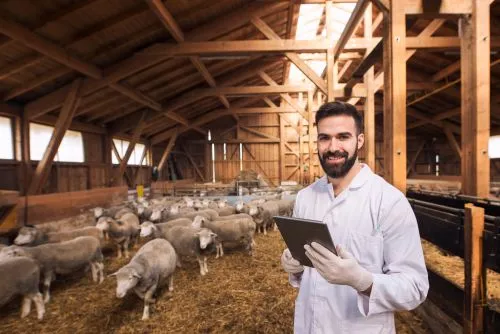
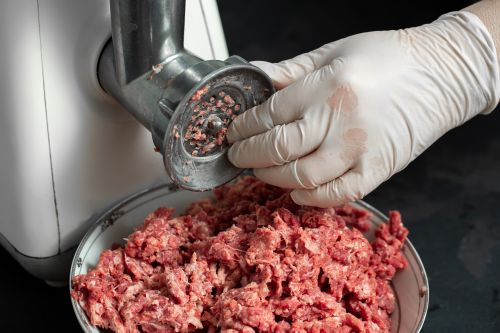
One of these developments is the increase in domestic meat production. Data from the livestock sector indicate that slaughtering and processing activities have grown in recent years. In the first part of 2025, animal slaughter increased by approximately 9–10%, while meat production rose by over 13%, according to data from the National Institute of Statistics and sector analyses. This dynamic has contributed to a reduction in imports and to a stronger presence of products originating from local farms on the domestic market.
In this context, the Minister of Agriculture, Florin Barbu, has repeatedly stated that support programs for the livestock sector have played a role in strengthening domestic production. According to official statements, Romania currently covers approximately 78% of its domestic meat consumption through its own production, a level achieved through investments in farms and breeding facilities, particularly in the poultry and pig sectors.
Recent agricultural policies have primarily focused on two directions: revitalizing livestock production and reducing dependence on imports. In recent years, programs have been launched to develop pig breeding farms and to expand production capacities in the poultry sector, financed through national schemes and European funds. At the same time, the ministry has promoted measures aimed at increasing market transparency, including initiatives related to food labeling and the control of commercial practices.
However, the structure of Romania’s agri-food trade remains unbalanced. The country exports significant volumes of raw agricultural commodities while continuing to import processed food products with higher added value. This structure explains why the agri-food deficit remains high compared to other European Union member states.
At the same time, the economic context has influenced the evolution of the domestic market. The Ministry of Agriculture has recently pointed out that consumers’ purchasing power has declined and that food consumption has decreased significantly in recent years. This development may temper imports, but it does not represent a structural solution for balancing the trade deficit.
Thus, the reduction of the trade deficit in the food sector should be seen as a signal of stabilization. The increase in meat production shows that investments in livestock farming can have a direct impact on the trade balance. In the long term, however, the balance of the agri-food sector depends on the development of the processing industry and on a more efficient integration of the food chain – from farm to final product destined for the consumer.
(Photo: Freepik)
Did you learn something new from this article?
Read also: