366

Author
Meat.Milk
Share on


Published on
2026 March 20
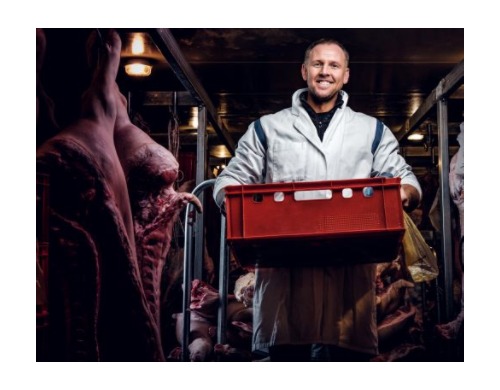
The meat sector in Romania operates within an economic model in which added value is generated outside the domestic links of the supply chain. Although agricultural production provides raw materials, a significant share of the economic value is captured at the processing and distribution stages, often outside the country.
Pork consumption exceeds 700,000 tons annually, making this segment the main driver of the meat market. At the same time, domestic production does not fully cover demand, and imports of meat and meat products exceed €1 billion annually, reflecting a persistent structural deficit. This gap is not only a matter of volume, but also of industrial structure.
In the absence of integrated capacities—commercial farms, efficient slaughterhouses, and logistically connected processing units—raw materials are only partially utilized. Locally raised animals are either exported as raw material or replaced within the domestic chain by products originating from other European Union Member States, where processing is more developed.
The economic value of meat is not determined at the farm level, but in the subsequent stages: cutting, processing, packaging, logistics, and access to retail. These components can multiply the initial value of the raw material several times. In Western European countries, the integration of these stages allows value to be retained within the economy and stabilizes trade flows.
In Romania, production fragmentation and the lack of coherent industrial integration limit the ability to capture this value. Logistics costs increase, the continuity of supply is affected, and dependence on imports becomes structural.
For the meat sector, the issue is not agricultural production itself, but the economic architecture of the food chain. Without the development of processing capacities and the integration of its links, raw material remains a starting point, not a source of economic value.
Looking ahead to 2026, the consolidation of the sector depends on investments in slaughtering, processing, and logistics, as well as on the ability of operators to build integrated supply chains that function predictably. In the absence of such a model, the gap between agricultural potential and economic performance will continue to define Romania’s meat market.
(Photo: Freepik)
Did you learn something new from this article?
Read also: