301

Author
Meat.Milk
Share on


Published on
2026 March 09
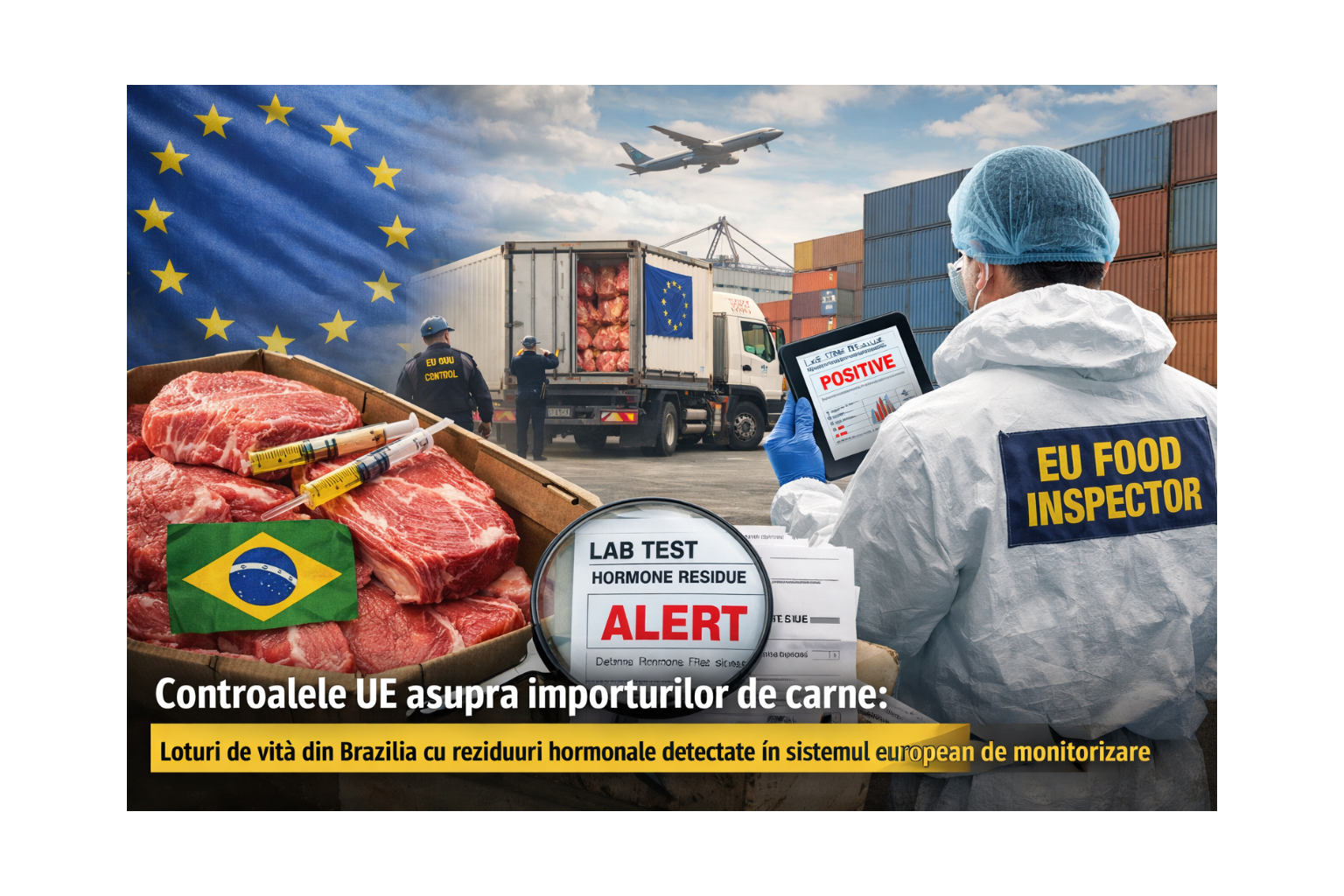
The European food safety control system has recently identified batches of beef originating from Brazil that contained residues of growth hormones banned in the European Union. The cases were reported through the EU’s veterinary monitoring mechanisms and prompted additional checks on trade flows originating from this country, one of the main suppliers of beef to the European market.
According to information analyzed during an audit conducted by the veterinary services of the European Commission (DG SANTE), approximately 80 tonnes of beef were identified with traces of the hormone 17β-estradiol, a substance prohibited in the European Union for cattle growth promotion. The use of hormones to stimulate animal growth has been banned in the EU since 1989, with European legislation establishing very strict limits regarding residues of pharmacologically active substances in products of animal origin.
The respective batches were identified through import control mechanisms and the Rapid Alert System for Food and Feed (RASFF), which enables the immediate transmission of information between Member States when non-compliance is detected. According to standard procedures, suspicious products are withdrawn or blocked from the commercial chain, while the operators involved are subject to additional inspections.
However, the scale of the incident must be analyzed in relation to the total volume of trade. The European Union imports approximately 300,000–350,000 tonnes of beef annually, and Brazil is one of the main suppliers to the European market. In this context, the quantity identified as non-compliant represents a small proportion compared with total trade flows, yet the case highlights the importance of maintaining rigorous border control mechanisms.
According to Eurostat data, annual beef consumption in the European Union exceeds 6.5 million tonnes, and the market is characterized by a combination of domestic production and imports from third countries. Differences between EU production standards and those applied in some exporting countries mean that veterinary inspections remain a central element of European food safety policy.
The case confirms the effectiveness of the European Union’s control mechanisms, which enable the rapid identification and management of such situations. At the same time, incidents of this type are also analyzed within the framework of trade dialogue between the European Union and exporting countries, where compliance with European sanitary and veterinary standards represents an essential condition for access to the EU market.
(Photo: AI GENERATED)
Did you learn something new from this article?
Read also: