1544

Author
Meat.Milk
Share on


Published on
2026 March 10
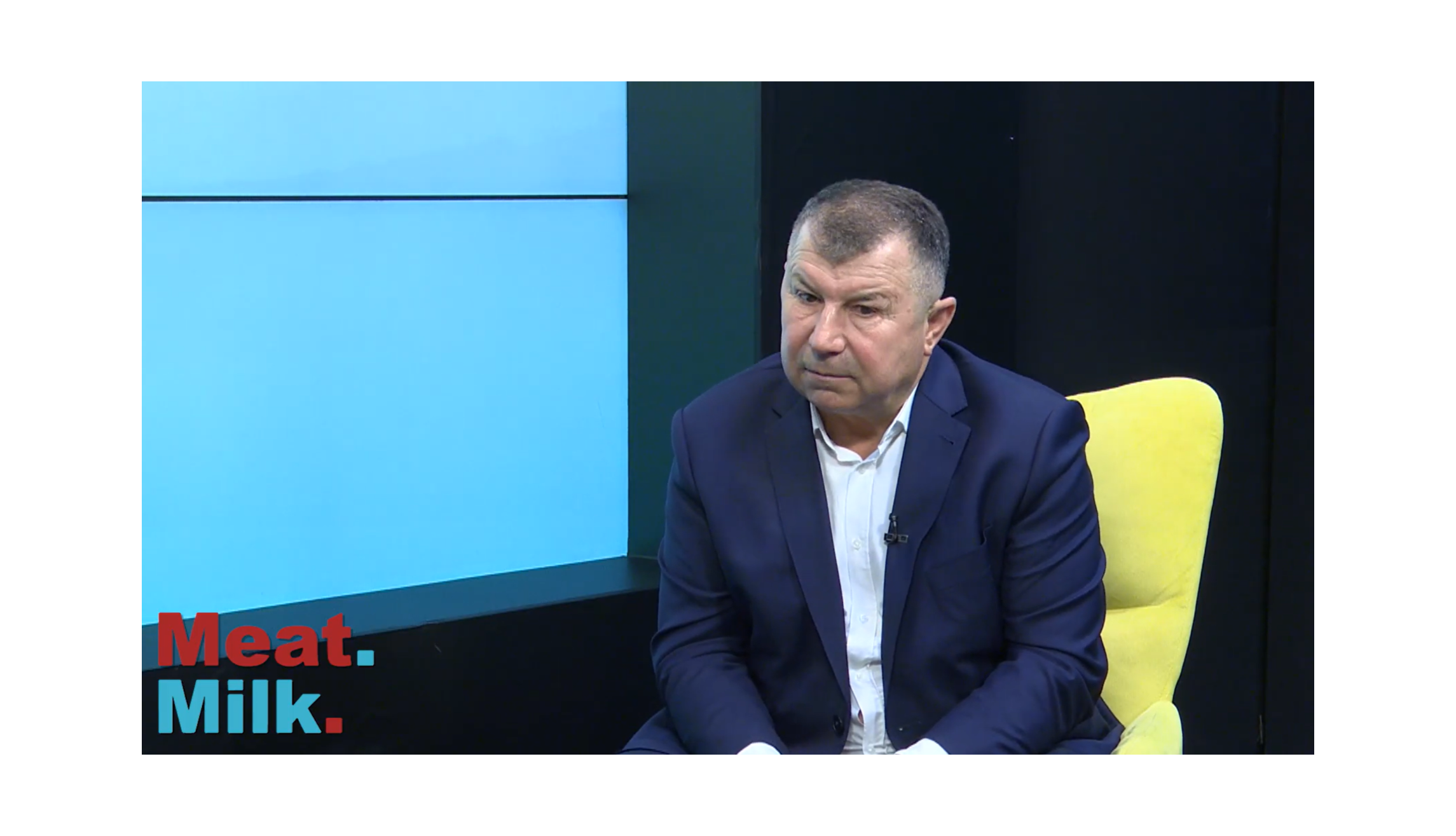
The Romanian food industry is often viewed through numbers: production, consumption, exports, or investments. Beyond these indicators, however, there are people who have experienced this industry from the inside, in different periods and from different positions. One of them is Aurel Simion, entrepreneur, former State Secretary in the Ministry of Agriculture, and one of the consistent promoters of Romanian products and quality schemes in the agri-food sector.
His professional journey began before 1989, in the field of food control. It was a time when the food industry operated under completely different rules than those of today, and experience was gained directly in the field. Continuous contact with slaughterhouses, processing units, and sanitary-veterinary control systems became a practical school in a domain where responsibility cannot be delegated: products reach people’s tables, and every stage of the process requires rigor and competence.
After the economic changes of the early 1990s, Aurel Simion took the step toward entrepreneurship. At a time when the Romanian economy was still in transition and access to capital and information was limited, he built the company AVI-GIIS. For the generation of entrepreneurs who started during that period, building a company did not mean only investment, but also direct work in production, risk-taking, and the ability to develop in an unstable economic environment.
The years that followed brought a comprehensive experience within the industry: production, associative representation, and involvement in public policy. In 2019, Aurel Simion was appointed State Secretary in the Ministry of Agriculture and Rural Development, a position from which he came into direct contact with the institutional mechanisms that shape the functioning of the agri-food market.
One of the directions in which he has been consistently involved is the promotion of quality schemes for agri-food products. From traditional product or mountain product to European systems such as PGI, PDO, or TSG, these instruments represent more than administrative procedures. In essence, they are a form of recognition of a country’s gastronomic identity and a way to add value to local products.
Within the same logic of valorizing local resources lies the concept of local gastronomic points, developed in Romania as a rural development tool. The idea is simple: households can directly capitalize on the products they produce by offering local dishes in a regulated and authentic setting.
The concept was supported and developed in collaboration with the late Ivan Patzaichin, who promoted the idea of local gastronomy and slow tourism as an economic resource for communities in the Danube Delta and the Romanian rural environment.
For Aurel Simion, the discussion about the industry inevitably returns to people. Investments, technology, or regulations may support the development of a sector, but they cannot replace those who actually work in production, control, or management.
This is why one of the ideas he consistently emphasizes is education—from the professional training of those working in the industry to the food education of consumers.
“The greatest investment a country can make is in education. You cannot build a high-performing industry without education and without people who know their trade.”
In an industry where responsibility begins with the raw material and ends on the consumer’s table, this perspective becomes more than an opinion. It becomes a condition for the future of the agri-food sector.
Did you learn something new from this article?
Read also: