236

Author
Meat.Milk
Share on


Published on
2026 April 01

The Government of Romania has approved the signing of the trade agreement between the European Union and the Mercosur states, a decision that aligns the country with the EU’s trade strategy in an international context marked by competition for markets and resources. According to statements by the Government spokesperson, Oana Dogioiu, the agreement is supported as an instrument of economic openness, with the potential to increase exports and strengthen the Union’s external trade relations.
The EU–Mercosur agreement creates one of the largest free trade areas globally, covering an economic bloc of over 700 million consumers. The gradual elimination of customs tariffs for most industrial goods and a significant share of agri-food products represents the core element of the agreement. In this framework, Romania is positioned as an indirect beneficiary, particularly through its integration into European trade flows and the facilitated access of processed products to South American markets.
Official statements emphasize that the Government’s decision takes into account both economic advantages and the need for protective measures for sensitive sectors. In particular, agriculture remains an exposed area, given that Mercosur producers benefit from lower production costs and different market structures. In this context, Romanian authorities support the inclusion and use of European safeguard mechanisms designed to limit the impact of potential rapid increases in imports.
For Romania’s agri-food sector, the implications are dual. On one hand, there are opportunities for expansion in value-added products, including those falling under European quality schemes, where differentiation can offset price pressure. On the other hand, certain segments—especially beef and other sensitive products—may face intensified competition in the absence of effective adaptation and protection mechanisms.
The position expressed by the Government, through its spokesperson, reflects a pragmatic approach: supporting the agreement as an economic opportunity, while simultaneously ensuring careful monitoring of its effects on the domestic market. Looking ahead, the actual impact will depend on Romania’s ability to capitalize on access to new markets and to strengthen its competitiveness within the European single market.
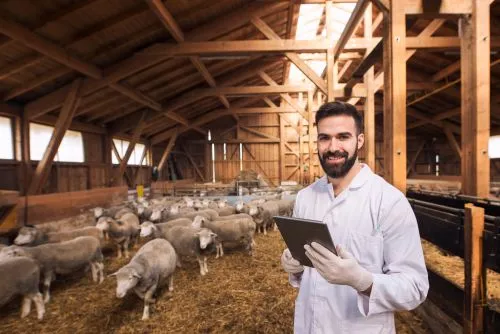
(Photo: Freepik)
Did you learn something new from this article?
Read also: